
A grease trap is one of the most critical — and most overlooked — pieces of equipment in any commercial kitchen. Whether you run a restaurant, hotel, catering facility or food processing plant, a properly functioning grease trap is not optional. It is a legal requirement designed to protect public sewer infrastructure from the damaging effects of fats, oils, and grease, collectively known as FOG.
Neglecting your grease trap does not just risk a blocked drain. It can result in regulatory fines, temporary closure, environmental contamination, and costly emergency repairs. A thorough grease trap inspection is the most reliable way to catch problems early — before they become expensive or legally problematic.
This guide covers everything you need to know about grease trap inspections: what they involve, what inspectors look for, how to prepare, and how to keep your system in good working order between visits.
Table of Contents
What Is a Grease Trap and How Does It Work?
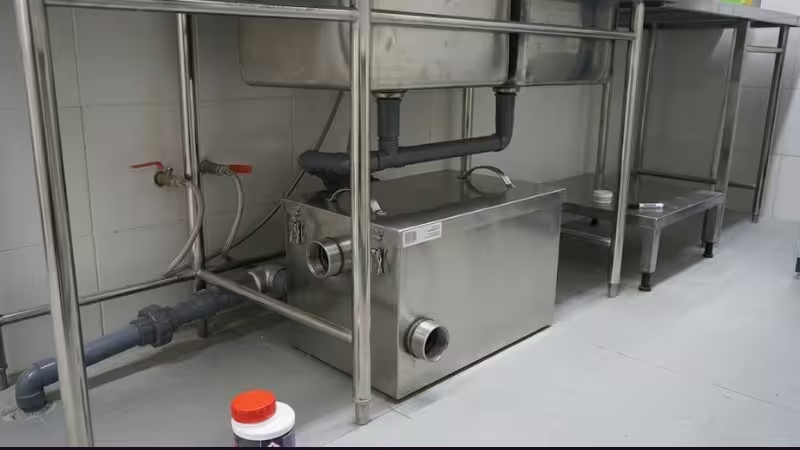
Grease traps — sometimes called grease interceptors — are plumbing devices installed in commercial kitchens to intercept FOG before it enters the municipal sewer system. FOG enters the wastewater stream during the cleaning of pots, pans, dishes, and kitchen surfaces that have come into contact with foods like deep-fried items, meats, sauces, butter, cheese, and baked goods.
Most passive grease traps operate without any moving parts. Greasy wastewater flows into the trap through a vented flow-control fitting, which regulates the rate of flow and prevents surges from overloading the system. The water passes through a series of baffles that slow the flow and allow enough time for lighter fats and oils to rise to the surface. Clean water settles at the bottom and exits through an outlet valve, while the FOG remains trapped inside the unit until it is cleaned out.
The Difference Between Grease Traps and Grease Interceptors
Although the two terms are often used interchangeably, they refer to different technologies. Grease traps are smaller, installed indoors, and positioned close to the fixtures they serve. They can typically be cleaned by kitchen staff without specialised equipment. Grease interceptors, on the other hand, are large underground units capable of holding several thousand litres, and they serve higher-volume operations such as large restaurants, supermarkets, and factories. Cleaning a grease interceptor requires licensed contractors with specialised pumps and hoses.
It is also worth distinguishing grease traps from automatic grease removal units and grease converters. The former uses hydrostatic pressure or a skimmer mechanism to clean itself, while the latter relies on bacteria and enzymes to break FOG down into a water-soluble substance that can be safely discharged into the drainage system.
Why Grease Trap Inspections Matter
The consequences of a failing or poorly maintained grease trap extend well beyond an unpleasant smell in the kitchen. The US Environmental Protection Agency estimates that nearly half of all sewer blockages — roughly 400 000 per year — are caused by grease. Cleanup costs from sewer overflows can exceed R1,8 million per incident. In the UK, the Environment Agency estimates that 75% of sewer blockages result from FOG build-up.
For food service businesses, the risks are direct and immediate. A blocked grease trap can force a temporary shutdown, leading to lost revenue, spoiled stock, and lasting reputational damage. Inspections help identify issues before they reach that point.
Regulatory and Legal Obligations
Commercial kitchens in most jurisdictions are legally required to have grease traps installed and properly maintained. In South Africa, compliance with local municipality wastewater by-laws is mandatory for any food service establishment, with violations potentially resulting in fines or the suspension of operating licences. Internationally, legislation such as the UK’s Water Industry Act (Section 111) makes it an offence to discharge substances that could obstruct the sewer system.
Maintenance records are not optional. It is a legal requirement in many regions to keep up-to-date logs of grease trap cleaning and servicing. Inspectors will typically ask to see these records first — so keeping them current and on hand is essential.
What Happens During a Grease Trap Inspection?
A grease trap inspection is a structured assessment of your system’s condition, performance, and compliance. Think of it as a routine check-up — identifying issues while they are still manageable, rather than waiting for a failure.
Depending on your system’s usage, a professional inspection should be carried out every one to three months. The inspection will typically include measuring grease and solid levels, assessing the physical condition of the unit, conducting flow testing, inspecting pipework for blockages or damage, and verifying that all regulatory requirements are being met.
What Inspectors Check First
The first thing most inspectors will ask for is your maintenance and cleaning log. This documentation confirms that the system has been regularly serviced and provides a record that can protect your business in the event of a compliance dispute. After reviewing the records, the inspector will access the unit to carry out the physical assessment.
Grease cap measurement is a key part of the process. Inspectors measure the depth of the floating FOG layer as well as any settled solids at the bottom of the trap. The widely accepted industry standard — often referred to as the 25% rule — states that a grease trap must be cleaned when the combined grease and solid accumulation reaches 25% of its total working depth. Beyond this threshold, the trap’s efficiency deteriorates significantly, and unfiltered FOG may begin bypassing the unit entirely and entering the sewer.
The Grease Trap Inspection Checklist
Whether you are preparing for a professional inspection or conducting your own routine checks, the following areas must be assessed thoroughly.
Physical Condition and Structural Integrity
The grease trap must be free of cracks, corrosion, and visible damage to any part of the unit, including the baffles, housing, inlet and outlet pipes, and lid. Even minor cracking can lead to foul odours, leaks, and environmental contamination. If the unit shows signs of significant deterioration, it may need to be replaced rather than repaired.
The lid must sit properly and form a tight seal. For underground interceptors, watertightness is particularly important — the unit must prevent groundwater from infiltrating the trap, and equally must prevent FOG from escaping into the surrounding soil or groundwater.
Watertightness and Seals
Loose or worn seals, damaged gaskets, and any visible leaks around the unit all compromise the system’s effectiveness and can lead to non-compliance findings. During a grease trap inspection, these areas should be checked carefully. Leaks do not just affect performance — they can result in environmental contamination and significant fines.
Flow-Control Valve Condition
The flow-control valve — a T-shaped fitting positioned between the connected fixtures and the trap — regulates the rate at which wastewater enters the system. Without it, sudden surges from sinks or dishwashers can overwhelm the trap and reduce separation efficiency. During an inspection, this valve should be checked for blockages, wear, missing parts, and proper venting. A missing or malfunctioning air intake vent can create a vacuum within the trap, causing water to rush in too rapidly.
Correct Positioning and Distance from Fixtures
A grease trap must be positioned to allow optimal flow from all connected fixtures. Traps installed too close to high-temperature fixtures such as dishwashers may not allow enough time for water to cool before entering the unit, which can cause FOG to dissolve and pass through — only to re-congeal further down the sewer line. On the other hand, traps installed too far from fixtures can result in grease building up in the connecting pipework. Local authority guidelines should be consulted when assessing the correct placement for your specific setup.
Adequate Clearance for Access
The grease trap must be accessible for both routine cleaning and professional servicing. Obstructions around the unit make maintenance more difficult and increase the risk of problems going undetected. Underground grease traps often provide a practical solution where space is limited, as they can be accessed via a manhole cover at ground level while keeping the kitchen floor clear.
Grease and Solid Accumulation Levels
As mentioned, the 25% rule serves as the standard threshold for pump-out scheduling. However, this is a guideline rather than a hard limit. High-volume kitchens, or those serving particularly greasy or fried foods, may need more frequent cleaning. Monitoring the outlet baffle for grease build-up is a useful way to gauge whether the trap is nearing capacity between formal inspections.
Food Waste and Incorrect Connections
Solid food scraps should never enter the grease trap. Garbage disposals and food waste units must not be connected to the grease trap under any circumstances. Solid food waste overloads the trap, reduces its efficiency, and creates conditions for decay, foul odours, and pest attraction. During an inspection, all connected fixtures must be confirmed as appropriate kitchen wastewater sources only.
Equally, a grease trap must never be used for sanitary waste or drainage from non-kitchen areas. Inspecting all inlet connections is a key part of confirming that the system is being used correctly and compliantly.
Odour Control and Sanitation
Excessive odours detectable in or around the kitchen are a clear sign that the grease trap requires attention. Inspectors will also check the area surrounding the unit for grease spills, standing water, FOG residue, and any evidence of pest activity. Keeping the area clean between inspections is an important part of maintaining a hygienic food service environment.
How to Prepare for a Grease Trap Inspection
While most formal inspections come with advance notice, surprise checks do occur — particularly from municipal authorities or health departments. The best preparation is simply to maintain your system consistently.
Keep Accurate Maintenance Records
Maintain a cleaning log that records every service date, who performed it, what was found, and what action was taken. This documentation is both a legal requirement in many jurisdictions and a practical tool for tracking patterns in your system’s performance. If your trap is filling faster than expected, your log will help you identify whether usage has increased or whether there is an underlying issue.
Train Your Staff
Your team plays a direct role in the health of your grease trap system. Staff should be trained to dry-wipe pots, pans, and dishware before wet-washing to reduce the volume of FOG entering the drain. They should also understand what cannot go down the drain, how to identify signs of a problem, and when to escalate an issue to management.
Address Known Issues Before the Inspection
Slow drainage, unusual odours, or visible build-up around the unit are all warning signs that should be dealt with proactively — not left for the inspector to discover. Resolving these issues before a scheduled inspection not only demonstrates a commitment to compliance but generally results in a smoother process.
What Happens If a Grease Trap Fails an Inspection?
The consequences of a failed inspection vary depending on the severity of the non-compliance. In minor cases, the inspector will issue a notice outlining the problems identified and provide a timeframe within which they must be rectified. Common issues include excessive grease build-up, poor maintenance records, blockages, and non-compliant installation or connections.
In more serious cases — particularly where there is evidence of ongoing negligence or repeated violations — penalties can escalate to formal enforcement action, operational disruption, or legal proceedings. If a failed inspection reveals that FOG has been entering the public sewer system as a result of a malfunctioning trap, the business owner may be held financially responsible for any resulting damage or cleanup costs.
The most cost-effective approach is always preventative maintenance. Emergency repairs and compliance penalties cost significantly more than a regular servicing schedule.
How Often Should a Grease Trap Be Cleaned?
Cleaning frequency depends on the volume of food service, the types of food being prepared, and the size of the unit. As a general guideline, manual grease traps require daily cleaning alongside a thorough deep clean every one to three months. Larger grease interceptors are typically serviced by licensed waste haulers on a schedule determined by the local sewer authority.
It is important to note that a grease trap will continue to accept water even after it has reached full capacity — it simply stops separating FOG. This means the trap can appear to be functioning normally while unfiltered grease passes directly into the sewer. Routine inspection and monitoring, rather than waiting for a visible problem, is therefore essential.
When a grease trap is cleaned, the collected FOG must be placed into a sealed, watertight container and disposed of as waste. Unlike used cooking oil from deep fryers, which can be recycled for biodiesel or soap production, FOG from grease traps is not recyclable and must go to landfill. All waste removal must be carried out by a licensed contractor, and the associated documentation — such as a waste hauler manifest — must be kept on file.
Professional Grease Trap Inspection Services
While basic visual checks and daily cleaning tasks can be handled by trained kitchen staff, a formal grease trap inspection should be carried out by a qualified professional. Professional inspections go beyond what is visible to the naked eye, assessing pipework, flow performance, baffle integrity, and overall system condition. They also provide the compliance documentation needed to satisfy municipal and health authority requirements.
For businesses that operate at high volumes or serve particularly FOG-heavy menus, professional servicing every one to two months may be more appropriate than the standard quarterly schedule. If in doubt, consult your local authority or a licensed grease management specialist to establish the right frequency for your operation.
Keeping your grease trap in good working order is not just about avoiding fines — it protects your business, your kitchen team, and the broader community from the serious consequences of a blocked or overflowing sewer system.


