
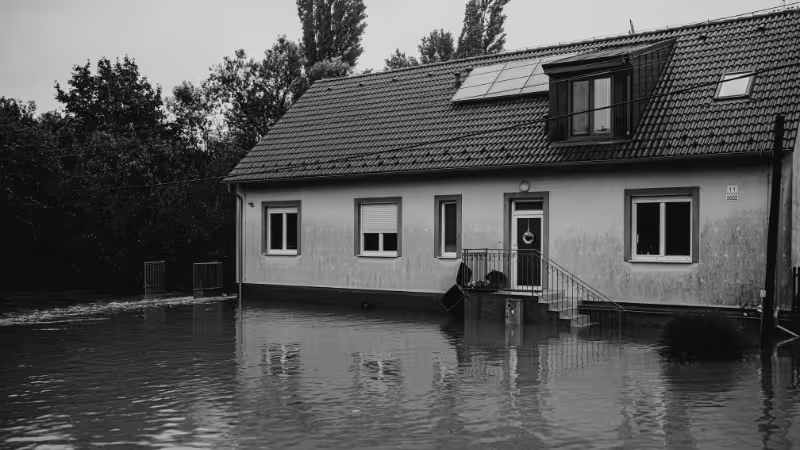
Flooding is the most common and widespread weather-related natural disaster in the world. It can happen within minutes of heavy rainfall, overwhelm stormwater systems, and cause catastrophic damage to buildings, contents, and infrastructure. For South African property owners — particularly those in coastal cities like Cape Town, where seasonal rains, ageing infrastructure, and storm surges pose a persistent threat — understanding how to protect a building before floodwaters arrive is essential.
One of the most effective ways to do this is through dry floodproofing. But what is a dry flood, and what does dry floodproofing actually involve? This guide breaks it all down.
Table of Contents
What Is a Dry Flood?
The term “dry flood” refers to a flood mitigation approach rather than a type of flood itself. When people ask what is a dry flood, they are typically asking about dry floodproofing — a method of protecting a building by keeping floodwaters out entirely, rather than allowing water to enter and then managing it once inside.
Flooding occurs when water overflows onto normally dry land. This can result from heavy rainfall, rivers bursting their banks, burst municipal pipes, or storm surges along the coast. Flash floods are particularly dangerous, as they combine the destructive force of a flood with rapid onset, sometimes arriving within minutes of the causative rainfall with little warning.
Dry floodproofing is the built environment’s answer to these risks. According to FEMA, dry floodproofing refers to measures that eliminate or reduce potential flood damage by keeping floodwaters out of a structure. The building itself is made watertight below a specified flood protection level, or an exterior protective barrier is constructed around it to achieve the same result.
How Dry Floodproofing Works
Sealing the Building Envelope
The starting point of any dry floodproofing project is sealing every potential point of entry for water. Floodwaters exploit cracks, porous surfaces, utility penetrations, and gaps around door and window frames. Waterproof coatings, membranes, and sealants — typically cement-based or asphalt-based compounds, epoxies, or polyurethanes — are applied to exterior walls and foundations to prevent seepage.
Structural joints, including where walls meet foundations, must also be sealed. Where clear coatings are preferred for aesthetic reasons, epoxies and polyurethanes can be applied without significantly altering the building’s appearance, though these tend to be less effective than cement or asphalt-based materials for resisting prolonged water exposure.
Strengthening Walls and Floors
A sealed building must also be structurally capable of withstanding the hydrostatic pressure exerted by standing floodwaters. As water rises against exterior walls, it creates significant lateral force — a force that increases with depth. On an unreinforced concrete block wall, as little as three feet of water can cause structural failure if the wall has not been designed and analysed for flood loads.
This is why a licensed structural engineer should always evaluate a building before dry floodproofing is implemented. Walls may need to be reinforced with fibre-reinforced polymer systems or additional masonry. Slabs must be checked against uplift forces, and footings must be assessed for their ability to handle the additional loads that come with a flooded scenario.
Flood Shields and Barriers for Openings
Walls can be sealed, but doors, windows, and service openings present a different challenge. Some lower openings can be permanently closed — for example, a low-set window can be replaced with brick or glass block. Where openings must remain functional, temporary watertight shields are installed when a flood threat is identified.
Shields are fabricated from steel, aluminium, or marine-grade plywood, depending on the size of the opening, the expected flood depth, and the duration of flooding. They are designed to transfer flood-induced forces into the surrounding wall structure, and are fitted with gaskets or sealants to prevent leakage around their edges. Commercial properties with large openings such as loading bays may require intermediate support columns and reinforced headers to manage the greater forces involved.
Passive systems — such as float-up gates that rise automatically with floodwaters — are also available and are often preferred because they do not rely on human intervention at the time of the flood. Active systems, by contrast, require a person to deploy the shields or close the barriers before water arrives, which means adequate flood warning time is essential.
Sump Pumps and Drainage Systems
No dry floodproofing system is completely impermeable. Some water will always seep through walls, around shields, or up through floor slabs. For this reason, an interior drainage system is a critical component of any dry floodproofing installation. This typically consists of a network of perforated pipes, a collection sump, and one or more sump pumps.
Submersible sump pumps are generally preferred, as they continue to operate even if water levels within the space rise above the pump housing. These must be connected to an emergency power supply — a backup generator or battery system — so that they remain operational during power outages, which frequently accompany severe storm events.
Backflow Valves
Sewage backflow is a commonly overlooked flood risk. When the municipal sewer system becomes overwhelmed during flooding, waste can be pushed back up through floor drains and sanitary fixtures into the building. Backflow valves — installed on drainage lines below the flood protection level — prevent this by closing automatically when flow reverses. For combined stormwater and sewer systems, backflow protection is particularly important, as these systems are the first to surcharge during heavy rainfall events.
Dry Floodproofing vs Wet Floodproofing
Wet floodproofing takes the opposite approach: rather than keeping water out, the building is designed to accept floodwaters in a controlled manner. Hydrostatic pressure is equalised on both sides of the walls and floor, reducing structural risk. After the flood recedes, the water drains away and the building is cleaned and restored.
Wet floodproofing is generally less costly to implement because it avoids the significant structural demands of keeping water out entirely. It is most appropriate for buildings where water-resistant materials are already used, such as agricultural storage or underfloor spaces, and where contents can be elevated or removed before a flood.
Dry floodproofing, by contrast, is the right choice where keeping the interior completely dry is critical. Residences, offices, retail spaces, healthcare facilities, and any building housing valuable equipment or stock require this level of protection. The trade-off is higher upfront cost and greater structural demands, but the benefit is the preservation of the building interior and its contents without the need for post-flood restoration.
It is worth noting that dry floodproofing is not permitted under FEMA guidelines for new or substantially improved residential structures located within a designated Special Flood Hazard Area. For non-residential buildings, however, it is an accepted means of achieving compliance with floodplain development requirements.
When Dry Floodproofing Is and Is Not Appropriate
Suitable Scenarios
Dry floodproofing is well suited to slab-on-grade buildings with concrete or solid masonry walls, in areas subject to relatively shallow, low-velocity flooding. It works best where flood depths are unlikely to exceed approximately one metre, where adequate warning time allows active components to be deployed, and where the building structure is sound enough to resist the resulting loads.
For South African properties — particularly those in Cape Town, Durban, and other coastal or low-lying urban areas facing storm surge, flash flooding, and increasingly intense seasonal rainfall — dry floodproofing is a practical and cost-effective retrofit option for many existing commercial and residential buildings.
Limitations to Keep in Mind
Dry floodproofing is generally not feasible where flood depths exceed around three feet, or approximately one metre, because the hydrostatic forces on walls and floor slabs become very difficult to manage without extensive and expensive structural upgrades. It is also inappropriate in areas subject to high-velocity flow, wave action, erosion, or significant debris impact, as these forces can puncture sealants and damage shields.
Most dry floodproofing systems require human action — someone must be present and prepared to deploy barriers before the water arrives. This makes the approach unsuitable where flash flooding is the primary risk and warning times are short. Passive systems mitigate this somewhat, but they must be properly maintained and tested to be reliable.
Any dry floodproofing system that fails — whether because flood depths exceeded the design level, a shield was not deployed in time, or a sump pump lost power — can result in more damage than if the building had simply been allowed to flood, because the sudden influx of water under unbalanced pressure can cause wall collapse or slab heave.
Benefits of Dry Floodproofing for South African Property Owners
Protecting Property and Contents
The most immediate benefit is the preservation of the building interior, its fittings, and its contents. Floodwaters cause enormous damage not only through direct inundation but through mould growth, bacteria, structural swelling, and contamination from sewage and debris. Keeping water out entirely avoids all of these secondary risks.
Reduced Insurance Costs and Claims
Buildings that have been properly dry floodproofed are less likely to sustain severe damage during flood events. Fewer and smaller insurance claims, combined with evidence of proactive flood mitigation, can lead to reduced premiums over time and a stronger position when negotiating cover.
Business Continuity
For commercial and industrial properties, every day of closure due to flood damage represents lost revenue, disrupted supply chains, and potential reputational harm. Dry floodproofing significantly reduces recovery time by preventing the interior damage that makes a building temporarily uninhabitable or inoperable. For businesses operating in flood-prone industrial zones or coastal commercial precincts, this can be the difference between a minor disruption and a prolonged closure.
Health and Safety
Floodwaters frequently carry contaminants including sewage, chemical runoff, and biological hazards. By preventing water from entering the building, dry floodproofing protects occupants and workers from exposure to these health risks, as well as the longer-term risks posed by mould and damp in the building fabric.
Maintenance and Professional Input
Dry floodproofing is not a once-off installation. Sealants and coatings deteriorate over time and must be inspected and reapplied regularly. Flood shields must be stored in accessible locations, clearly labelled, and tested to confirm they still fit correctly and that gaskets and seals remain intact. Sump pumps, backflow valves, switches, and generators must be serviced annually and tested under load.
Property owners should also develop a written emergency operations plan that sets out who is responsible for deploying each component of the dry floodproofing system, at what point in a flood warning the deployment should begin, and what the evacuation plan is if conditions deteriorate.
Given the structural complexity involved, effective dry floodproofing requires professional expertise. A licensed engineer must assess the building’s ability to withstand flood loads before any system is designed, and installation should be carried out by experienced contractors familiar with the specific requirements of floodproofing in the local environment.
For South African property owners, companies such as Drain Blasters offer professional flood-related services including emergency water extraction, de-humidifying, sewerage clean-up, and odour neutralisation — providing both the preventative and the responsive side of flood damage management.
Taking the Next Step
Understanding what is a dry flood — and more specifically, what dry floodproofing can and cannot do — is the first step toward making an informed decision about how to protect your property. Whether you own a home in a Cape Town suburb, a warehouse in an industrial zone, or a commercial property near a river, a professional assessment will clarify which approach is right for your building, your flood risk profile, and your budget.
The cost of implementing dry floodproofing is almost always lower than the cost of recovering from a serious flood event. With South Africa’s ageing stormwater infrastructure, increasingly intense rainfall seasons, and the persistent risks posed by burst geysers and municipal pipe failures, proactive flood protection is no longer optional — it is a sound investment in the longevity of your property and the continuity of your livelihood.


